The Intelligence Intellectuals
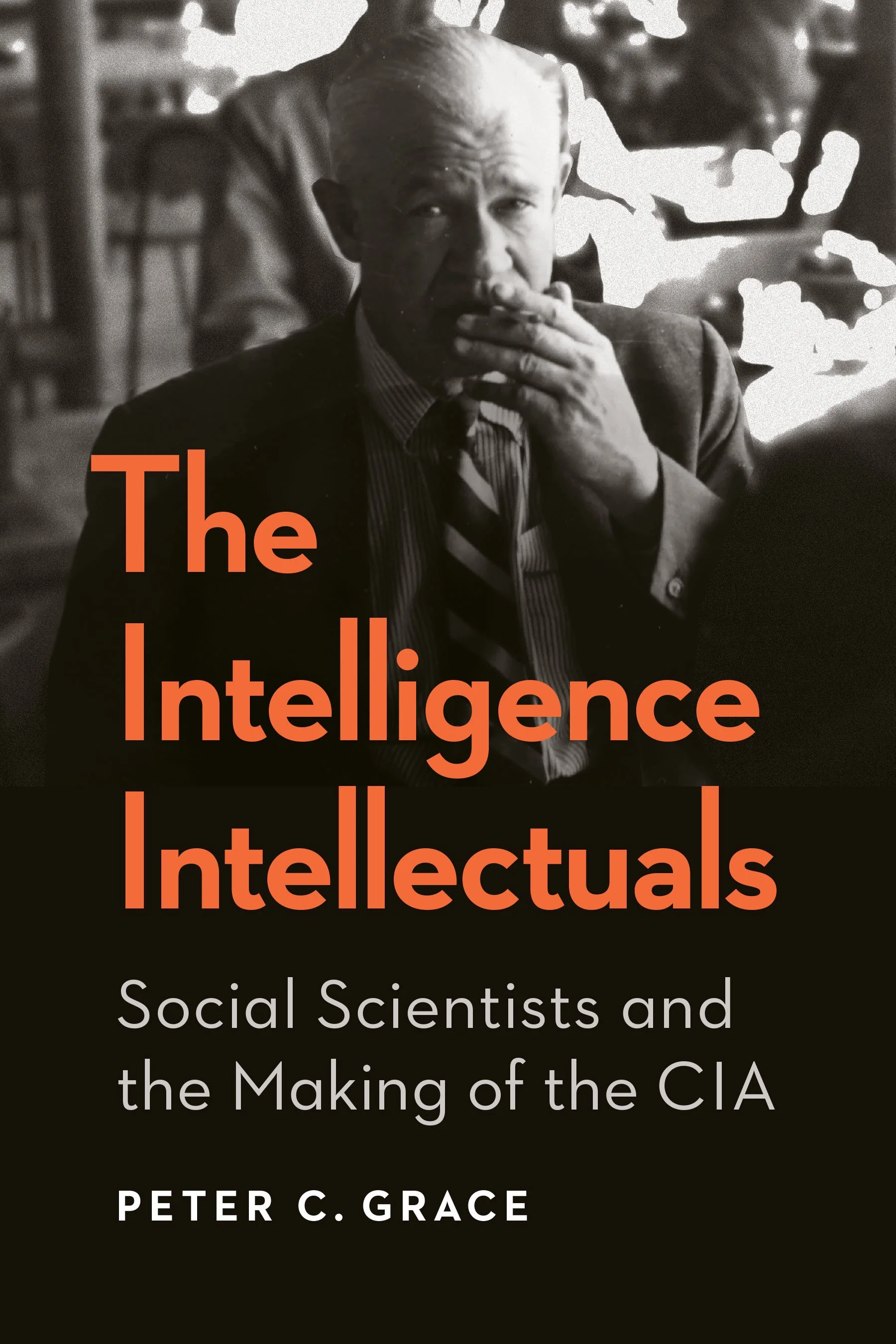
In the early days of the Cold War, the United States faced a crisis in intelligence analysis. A series of intelligence failures in 1949 and 1950 made it clear that gut instinct and traditional practices were no longer sufficient for intelligence analysis in the nuclear age.
Based on new archival research in declassified documents and the participants’ personal papers, The Intelligence Intellectuals reveals the history of how America’s brightest academic minds were recruited by the CIA to revolutionize intelligence analysis.
Peter C. Grace demonstrates how these professors—such as William Langer from Harvard, Sherman Kent from Yale, and Max Millikan from MIT—developed systematic approaches to intelligence analysis that reshaped the CIA’s methodology and gave the United States an advantage in the Cold War.
Readers interested in the history of intelligence and the history of the Cold War will enjoy this insightful book about the place of social science in national security.
“A terrific history of the CIA’s early struggle to become a world-class intelligence agency...” - David Hoffman, author, The Billion Dollar Spy: A True Story of Cold War Espionage and Betrayal
“A fascinating history of the people and purposes that shaped the US approach to peace-time strategic intelligence analysis after 1945.” - Lawrence Freedman, emeritus professor of war studies, King’s College London
“A must read for anyone interested in how and why intelligence in the United States functioned, and functions, as it does.” - Daniel Bessner, Anne H.H. and Kenneth B. Pyle Associate Professor in American Foreign Policy, Henry M. Jackson School of International Studies, University of Washington, and author of Democracy in Exile: Hans Speier and the Rise of the Defense Intellectual
“A masterful account. Thoroughly researched, Peter Grace’s book joins Cloak and Gown and Book and Dagger in showing how Ivy League academics silently crept into the world of intelligence analysis and eventually took it over.” - Greg Herken, author, The Georgetown Set: Friends and Rivals in Cold War Washington
READ THE REVIEWS
-
'The Intelligence Intellectuals is appropriately placed within a body of research that examines the entanglement of social science and national security. ... Grace’s study details how state actors organised and constrained academic inquiry in pursuit of strategic advantage.'
-
Michael Auslin in The Wall Street Journal says The Intelligence Intellectuals is:
"compelling reading for anyone who has thought about how to analyze information," and points out that it is also an organisational history – a case study in restructures – which he says was "a managerial revolution—the idea that a class of permanent professional administrators dominates government, business and other institutions – [and] brought to the world of cloak and dagger and the commanding heights of government, economics, education and society by an increasingly self-conscious (and self-protecting) professional class."
-
Weissgold writes:
‘Grace’s research, which is mostly drawn from primary sources, paints a vivid picture of the many bureaucratic challenges and turf wars faced by the fledgling CIA, including gaining access to compartmented information, but focuses largely on the uncharted waters of delivering timely, sophisticated, and coordinated strategic estimates.
Indeed, CIA’s creation is grounded in a resolve to prevent another Pearl Harbor by ensuring that available intelligence would be evaluated in one place and provided to those who need it.
Policymakers were not looking for CIA analysts to deal with the obvious. Their territory was, and continues to be, the unknown, the uncertain, and the deliberately hidden.’
-
Rees, writing for the New Zealand Listener, says:
‘In a potboiler, that something might be a call for James Bond-like operatives. In fact, Grace shows in The Intelligence Intellectuals, the response was the opposite. The agency set about recruiting academics, whose job it was to make sense of a rapidly changing world and provide the US government with clear assessments for their decisions. It may not sound electrifying, but it was the basis for the US gaining an advantage in the Cold War.
Grace points out that at the end of the war the Soviet Union had 600 spies in the UK, US and Canada; “the West had no one working in the Soviet Union”.
Langer’s deputy and successor was another historian, Sherman Kent, known for his profanities and a love of red braces. Grace shows how Kent set out to create structured ways to analyse information. He was, says Grace, trying to impose method on the “chaos of information” flooding into the CIA.’
-
On the Intelligence Intellectuals, Smith writes:
“This is going to be the most impactful IR book out of New Zealand in a generation (at least).”